We host a Christmas Eve dinner for family, a few friends, and neighbors. Every year, we have a theme or pick a country to “celebrate” during the dinner. Our theme dictates our menu, decorations, and the occasional costume.
I find it easier to pick a theme and stick with it to narrow my focus when I cook for large gatherings. Last year, our theme came from one of my husband’s family traditions. His mother had a copy of the “Cajun Night Before Christmas” and she would always get him to read the book to the younger family in his best and heaviest Cajun accent. It was always met with lots of laughs and fun, so we decided to plan a full Cajun Christmas around the book. An added bonus is that Creole and Cajun food are among the best, most diverse, and flavorful cuisines in the world.
We ordered dozens of masks, lots of purple, gold, and green beads, and decorations. We painted and decorated dozens of oyster shells, ordered a string of alligator lights, and even made a trip to New Orleans to pick up some local cajun necessities for the party.
When serving so many people, I knew we could not make all the specialties that I wanted, but we tried to hit the highlights of this delicious cuisine. I tried to figure out a way to offer hot fresh beignets to all the guests, but a vat of boiling hot oil and a bunch of little kids running around did not seem to go together so that had to be saved for another day. Our menu was pretty easy and many of the items we made ahead and were able to reheat the day of the party. We had a variety of foods and I do not think anyone left hungry. Enjoy and Merry Christmas or as Papa Noel might say, Joyeux Noel.

Red Beans and Rice
with Pickle Meat
I first heard the term pickle meat from my native New Orleanian friend and neighbor Danelle Garraway. She would often travel home and always went to her favorite New Orleans grocery stores. These were the “local places” that carried specialties such as pickle meat. What in the world is pickle meat?” was my first reaction when she told me it was the star ingredient in her red beans and rice. Basically, pickle meat is a pork roast that has been cut into cubes and pickled in a mixture of spices and vinegar. It is what many folks in New Orleans consider a quintessential ingredient for red beans and rice.
You can find it in many New Orleans markets, but you can make it yourself and I am now a devoted fan of pickle meat in my red beans, too.
Creole Pickled Pork
2 pounds boneless pork butt, cut into 2-inch cubes
1 quart distilled white vinegar
1/2 cup mustard seed
1 tablespoon celery seed
2 tablespoons Tabasco sauce
1 bay leaf
6 cloves garlic, peeled and smashed
1 tablespoon kosher salt
12 peppercorns
Combine everything except the pork in a non-reactive saucepan and boil for three minutes. Cool and place in a refrigerator container (plastic, glass or stainless-steel or even a heavy-duty zip lock bag) and add the pork. Stir to remove bubbles. Cover and refrigerate for one week turning bag each day to redistribute spices.
After a week, drain pork and use in red beans and rice or divide meat into freezer safe containers or ziplock bags, and freeze until needed. Defrost and cook when ready to eat.
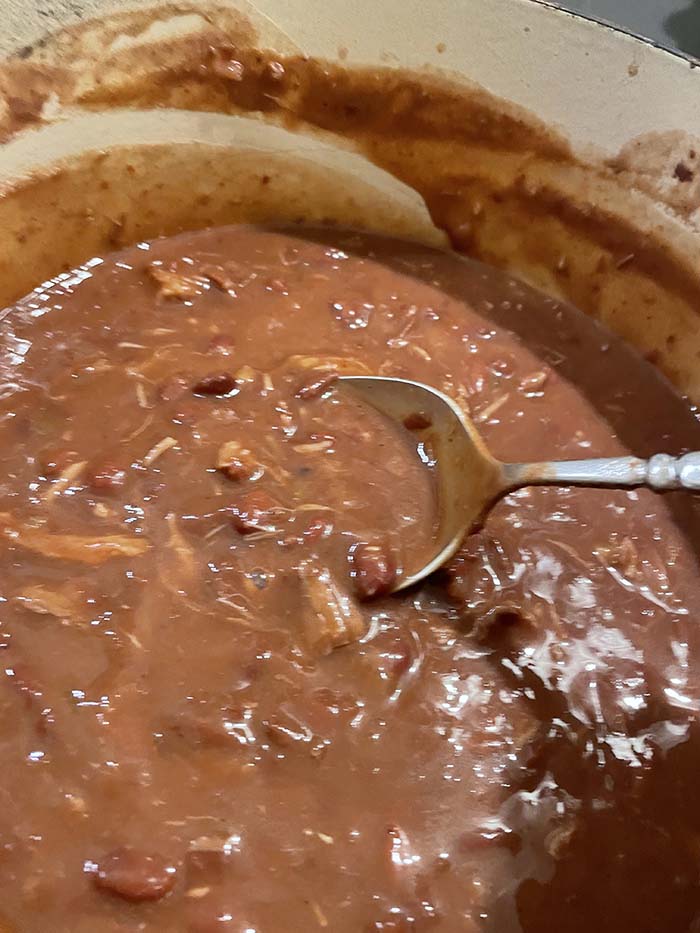
Kiwanis Club’s Award-Winning Red Beans and Rice
When my husband and I first met, he was active in the downtown Kiwanis Club and he and the club participated in the annual Red Beans and Rice festival in downtown Jackson. His group won several years in a row using this delicious but simple recipe. I added the pickle meat and sausage, but omitted the smoked ham hock.
1 pound dried red kidney beans, rinsed and picked through
2 tablespoons vegetable oil
1 medium onion, chopped
2 medium green bell peppers, chopped
3 stalks celery, chopped
2 teaspoons kosher salt
1 teaspoon freshly ground black pepper
5 cloves garlic, minced
3 bay leaves
1 teaspoon dried thyme
1 teaspoon hot sauce
1/2 teaspoon cayenne pepper
2 quarts water
1 smoked ham hock, if available OR 12 ounces pickled pork, cut into 1 inch pieces
2 pounds, andouille, or other smoked sausage, sliced into bite size pieces
The night before cooking, soak red beans in enough water to cover the beans by three to four inches. When ready to cook drain the beans and set aside.
Heat the oil in a large stock pot or Dutch oven and add the onion, bell pepper, celery, salt, and pepper to the pot. Cook, stirring frequently, until the onions and celery are semi-translucent and the bell peppers are tender, six to eight minutes. Add the garlic and cook for one to two minutes, stirring constantly.
Add the pickled pork or ham hock, bay leaves, thyme, hot sauce, cayenne pepper, water and beans to the pot and increase the heat to high. Cook, stirring frequently until the mixture comes to a boil, approximately six to eight minutes. Decrease the heat to maintain a simmer, cover and cook for one and half to two hours, stirring every 30 minutes. Uncover, increase the heat slightly to maintain a steady simmer and add sausage. Continue to cook for another 30 to 40 minutes or until the beans are tender and the sauce is thickened to your liking. Add additional water if needed.
If you prefer an even creamier texture, mash some of the beans with a potato masher.
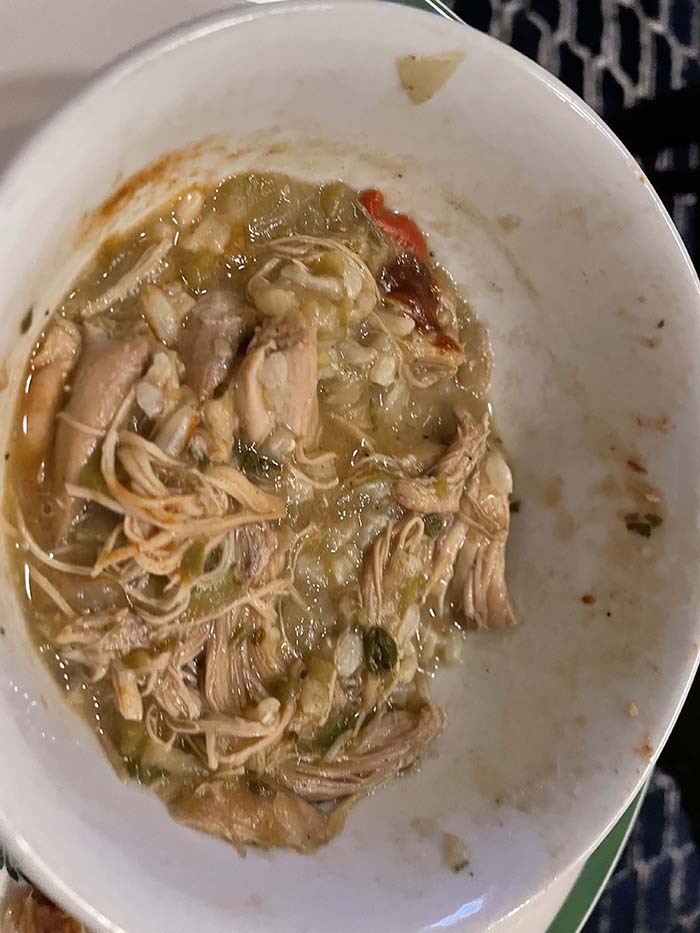
Everything-but-the-Kitchen-Sink Gumbo
I guess that title is a little repetitive because by definition, gumbo is highly seasoned stew that may include a variety of meats, including chicken, sausage, seafood, beef, duck, tasso (ham), rabbit, turtle, or squirrel. Oysters, shrimp and crabmeat are often added toward the end of many recipes.
I am not a gumbo purist; I break many of the unofficial rules. I often mix okra and tomatoes and whatever I feel like into my mixture. Usually, a combination of meat or seafood go into my pot. I live by the quote from Ella Brennan of the famous New Orleans restaurant family. She said “there are no rules for making gumbo except one: it must be delicious.”
Since I have already admitted that I am a gumbo renegade, I have to admit that I am also lazy roux maker. I love a dark rich roux, but I do not have the patience to stir for a long time to get the results. I have tried two different methods to quicken my roux cooking, and both have proven pretty successful for the lazy “Cajun” cook.
One quick method is to toast the raw flour on a cookie sheet at 350 for about an hour, stirring about every 15 minutes. The flour will toast and turn light brown.
Another way is to microwave the roux.
Microwaving the flour and oil is my preferred method. I mix the equal parts of oil and flour in a microwave safe dish and microwave about a minute at a time stirring well between each minute until the mixture has become a rich golden brown. Stir often so it does not burn. Both of these methods will speed up the process.
To cook the chicken and make the stock for the gumbo:
Cook: 1 whole chicken, 1 bay leaf, 1 onion, quartered, 2 stalks celery, 3 cloves of peeled garlic, salt, and pepper to taste and add enough water to cover the chicken by a few inches.
The day before you plan to make your gumbo, cook the whole chicken in a large Dutch oven for about 45 minutes. Allow chicken to cool in the broth. Once cooled, remove chicken and vegetables, and strain the broth. Set aside the broth in the refrigerator for the next day and remove all meat from the chicken. Store both in the refrigerator to be added to the gumbo later.
Gumbo ingredients:
1 cup toasted or regular flour
1 cup vegetable oil
2 large onions, chopped
4 ribs of celery, chopped
5 cloves of garlic, minced
1 to 2 green bell peppers seeded and chopped
1 tablespoon chopped Italian parsley
3 three cans of tomatoes and okra mixture
1 bay leaf
8-10 cups premade chicken stock
chopped chicken from the stock
1 pound smoked sausage or andouille sausage, cut into bite-size pieces
1 pound shrimp, peeled and deveined
cooked rice, for serving
In a very large Dutch oven over medium high heat, cook oil and flour stirring constantly to make a dark brown roux. *(Refer to the above tips if you want to speed up this process.) Be careful not to burn the roux.
Once roux has reached a golden to dark brown, add in all your vegetables and seasoning and stir well. Cook for about five to eight minutes to soften the vegetables. Add chicken stock and canned okra and tomato mixture.
Bring mixture to a boil and add sausage. Allow gumbo to cook for at least an hour. Add the chopped chicken and the raw shrimp and cook an additional 10 minutes.
Season with hot sauce, Cajun seasoning and additional salt and pepper to taste.
Serve with rice.
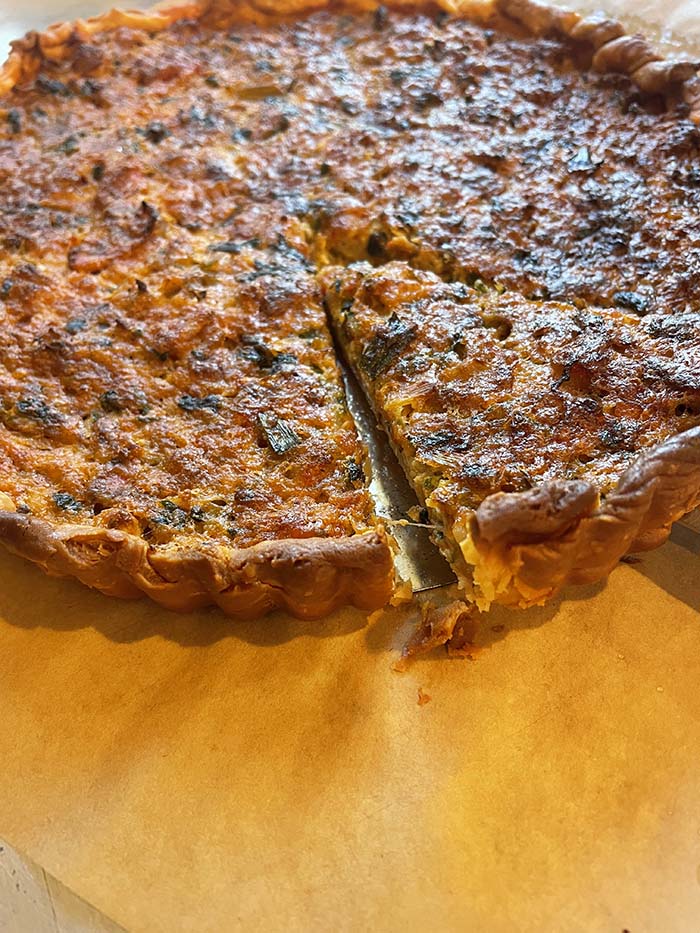
Crawfish Pie
Crawfish pie is a mainstay in Louisiana cooking and my friend Angelia Pryor shared this recipe. Her family enjoys it often. She got it from John Folse’s book, “The Encyclopedia of Creole and Cajun Cuisine.”
The crawfish filling is divine but was not sure about serving the pie on a large buffet. For simplicity, I opted to put a couple of teaspoons of the filling in mini muffin tins lined with small pieces of biscuit dough. I baked these for about 12-15 minutes on 400 degrees and they were perfect. Easy party pick up food.
This recipe is for the traditional pie but feel free to do either. The filling is delicious and is perfect either way.
1 pound crawfish tails, chopped
1/2 cup melted butter
1 cup diced onions
1 cup diced celery
1 cup diced red bell peppers
1/2 cup minced garlic
1 cup heavy whipping cream
1/2 cup Italian bread crumbs
1 egg, beaten
1/2 cup sliced green onions
1/2 cup chopped parsley
Salt and black pepper to taste
Louisiana hot sauce to taste
2 (9 inch) deep dish pie shells
Preheat oven to 450°F. Press one unbaked pie shell into a pie pan and set aside.
In a large skillet, melt butter over medium-high heat. Add onions, celery, bell peppers and garlic. Sauté three to five minutes or until vegetables are wilted. Blend in crawfish and sauté three to five minutes. Stir in cream, simmer 10 minutes then remove from heat. Blend bread crumbs and egg into crawfish. Add green onions and parsley then season with salt, pepper, and hot sauce. Place mixture in pie shell and cover with second crust.
With a knife, make 4 (1 inch) slits in top for ventilation. Place pie on a cookie sheet and bake 10 minutes. Reduce heat to 350°F, and bake 20 minutes or until crust is golden brown. Serve hot.
You can make the filling ahead and store in the refrigerator until ready to bake.
White Remoulade Sauce
My sister-in-law, Jan Ireland, gave me this recipe from “River Roads Cookbook” years ago and I think this it is one of the best versions of this classic sauce. Rémoulade, a spicy mayonnaise-based sauce used for seafood and salads.
1 1/2 cups mayonnaise
1/2 cup diced celery
1/2 cup thinly sliced green onions
2 tablespoons minced garlic or about 3 large garlic cloves, minced
1/2 cup Creole mustard
1/2 cup chopped parsley
1/2 cup ketchup
1/2 tablespoons lemon juice
1 tablespoon Worcestershire sauce
1 teaspoon hot sauce
salt and cracked black pepper to taste
In a two quart mixing bowl, combine all ingredients and whisk well. Once blended, cover and place in refrigerator, preferably overnight.
When ready, remove from refrigerator and adjust seasonings.
Debris Po’boy
I have included this recipe in a previous article but it still remains as one of the main things we cook in our crockpot and it is worthy of a second look.
Mother’s is a wonderful little dive in New Orleans that serves the best breakfast, shrimp jambalaya, and a spectacular sandwich called the “debris.” It consists of all the yummy meat scraps and pan drippings from a roast beef. It is my son’s favorite treat when we visit NOLA. This is a super simple crockpot version of this sandwich.
1 3 or 4 pounds beef roast, trimmed and cut in large cubes
1 can beef broth
1 onion, quartered
5 cloves garlic, peeled
1 envelope au jus gravy mix
1 envelope brown gravy mix
Put all ingredients in the crock pot and cook overnight or until the meat is easily shredded apart with a fork.
Serve on French bread, with shredded cabbage or shredded lettuce, mayo and spicy mustard.
If you are watching your salt in-take, feel free to substitute low sodium broth and gravy mix.
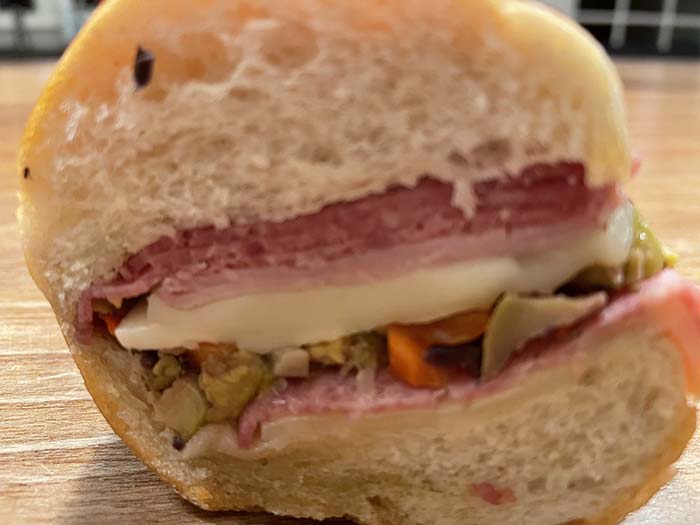
Mini Muffulettas or Muffuletta Po’Boys
Living so close to New Orleans we would often get up early and be in the city for an early lunch. We would stroll around the city and eat our way through most of it, but almost every trip required a visit to Central Grocery to grab a muffuletta to eat when we got home. This wonderful sandwich never made it to the Mississippi state line before we “just had to open the bag and eat just one piece.”
As I could not locate a good Italian loaf to use for the bread and for ease of prep and serving, I made muffulettas on long po’boy buns and sliced just before serving. Definitely, not Central Grocery quality but the sandwich was a big hit.
1 jar prepared olive salad, this can be located in the pickle or olive section of most grocery stores.
1 pound thin sliced, salami
1 pound thin sliced provolone cheese
1 pound thin sliced ham
1 pound thin sliced mortadella or prosciutto, optional but very good to add
Packaged small dinner or “Hawaiian buns” or one long po’boy loaf
Sesame Seeds for topping
Slice rolls or po’boy bread open and evenly top with alternating slices of meats and cheese. Spread some of the slightly drained olive salad on top of meat/cheese and close with top of bread.
Brush top with melted butter or olive oil and sprinkle with sesame seeds. Wrap tightly in parchment paper or foil and store in the refrigerator until ready to serve.
I like my muffuletta a room temperature or slightly warmed, but any way is delicious.
Stewed Tomatoes and Okra
2 pounds fresh okra
3 tablespoons vegetable oil
3 cups chopped onions
2 cups chopped celery
3 cups chopped tomatoes or 3 cups canned tomatoes including their liquid
2 bay leaves
2 teaspoon salt
1 tablespoon Worcestershire sauce
1/2 teaspoon cayenne or red pepper
1/2 teaspoon freshly ground black pepper
1 teaspoon dried thyme
3 cloves of garlic, chopped
Preheat oven to 300°. Rinse okra under cool water. Cut off stems and slice each pod into rounds.
Meanwhile, in a large oven proof pot, coat edges with vegetable oil. Add the okra and all the other ingredients to the pot. Mix well and cover pot with an oven proof lid. Bake in oven, stirring occasionally, for 1- 1 1/2 hours until all the “okra slime” has disappeared.
Remove lid and bake uncovered for the last 15 minutes or until okra is tender. Remove the bay leaves, adjust seasonings (add hot sauce if you like) and serve immediately
Zatarain's Mustard Vinaigrette
1/3 cup Zatarain’s creole mustard
1/4 cup honey
1/3 cup cider vinegar
1 teaspoon hot sauce
1 tablespoon green onions, chopped
1 teaspoon dried parsley
Salt and pepper to taste
1 cup vegetable oil
Put all ingredients in a jar and shake well. Mixture is best made several days ahead and stored in the refrigerator.
Cajun Christmas Part Two will appear in the December 22 edition.